
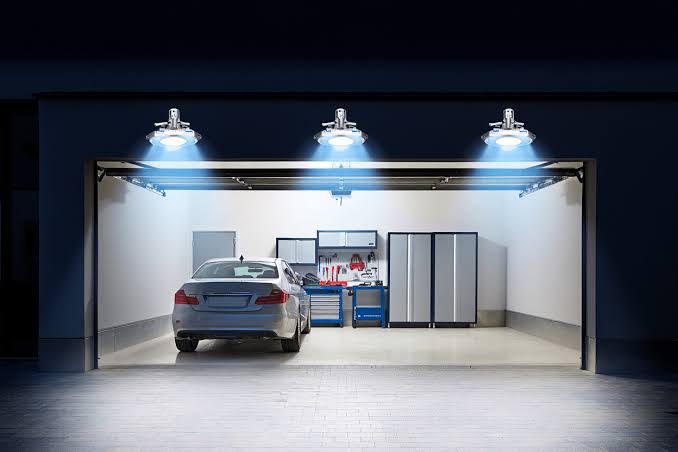
Poor garage lighting can hide floor clutter, sharp tools, vehicle edges, cords, and small spills. Improving safety usually requires more than installing one brighter bulb. A garage works better when general lighting covers the room evenly and focused lighting supports workbenches, storage areas, doors, and the spaces where people enter or leave vehicles.
Start With Dark Zones, Not Fixture Counts
Walk through the garage at the times you normally use it. Look for deep shadows beside vehicles, under shelving, near steps, around electrical panels, and between storage cabinets.
Thinking about practical household spaces can make the assessment more useful because lighting should follow actual movement. A bright ceiling fixture means little if your work area remains shadowed by your own body.
Watch for Glare Too
More brightness isn’t always safer. A bare high-output light directly in the line of sight can create glare that makes surrounding areas harder to see.
Diffused fixtures can spread illumination more evenly and reduce harsh visual contrast.
Separate General and Task Lighting
General lighting should make walking and parking comfortable throughout the room. Task lighting belongs over workbenches, tool stations, sinks, and other locations where you need to identify small objects clearly.
Thoughtful garage workspace planning also means placing lights where shelving or raised vehicle doors will not block them. Test fixture positions before making permanent changes.
| Garage Zone | Lighting Need | Common Problem |
|---|---|---|
| Parking area | Even overhead light | Vehicle shadows |
| Workbench | Focused task light | Hands block light |
| Storage shelves | Clear vertical light | Labels disappear in shade |
| Entry steps | Immediate visibility | Missed level changes |
Make Entrances Easy to See
The transition from a bright driveway into a darker garage can temporarily make obstacles harder to notice. Lighting near doors and steps helps people identify floor level changes quickly.
Consider broader home safety improvements when planning controls. A conveniently placed switch or suitable automatic lighting can be more useful than a powerful fixture that people forget to turn on.
Keep Fixtures Clear
Large boxes, overhead racks, and tall cabinets can block light and create new shadow lines. Recheck illumination whenever the garage storage layout changes.
A light source works only if the area it is meant to illuminate remains open.
Reduce Hazards the Lights Reveal
Better lighting often exposes problems that were already there: extension cords crossing walkways, oil on the floor, unstable tool piles, or objects stored too close to a vehicle door.
Treat visibility as the starting point rather than the solution. Clear those hazards once you can see them properly.
Common Lighting Mistakes
One mistake is choosing brightness based only on how powerful a fixture sounds. Beam spread, mounting height, garage shape, wall finishes, and obstructions all affect how useful the light will be.
Another is concentrating every fixture in the center of the ceiling. That arrangement can leave walls, shelves, and work surfaces dim. Even coverage generally improves safety more than one extremely bright central spot.
Frequently Asked Questions
Is daylight enough for a garage during daytime?
Not necessarily. Windows and open doors can create strong contrast between bright and shaded areas. Fixed lighting still helps illuminate corners, shelves, and workspaces consistently.
Where should task lights be placed near a workbench?
Position them so your head and hands do not constantly cast shadows across the work surface. Adjustable lighting can help when tasks vary.
Can motion-sensor lights help in a garage?
They can be useful for entrances and general movement, provided they activate reliably where people approach. Work areas may still need manually controlled task lighting.
Make Visibility Part of Garage Safety
Improve the areas that affect movement first: parking zones, steps, doors, tool stations, and floor-level hazards. Then add task lighting where detailed work takes place. The strongest setup is not simply brighter; it reduces shadows, limits glare, and makes hazards visible before someone steps, reaches, or drives into them.