
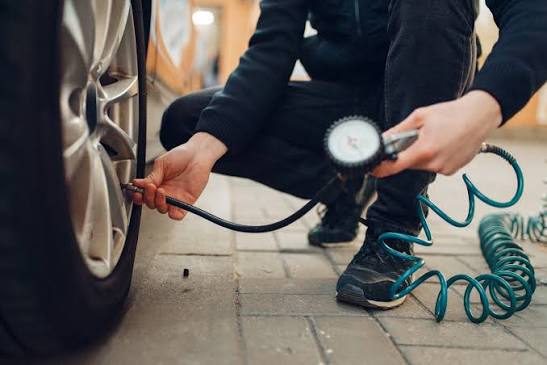
Highway tire safety starts with pressure, condition, and a quick visual inspection before sustained high-speed driving. Tires that are significantly underinflated, damaged, or badly worn can behave differently once speed and heat increase. Checking them before departure is much easier than discovering a problem on the motorway shoulder.
Check Pressure Before the Tires Heat Up
Tire pressure should generally be checked when the tires are cold, following the vehicle manufacturer’s recommended pressure information. Driving warms tires and can change the pressure reading.
General vehicle maintenance information can provide useful ownership context, but always use the pressure specified for your particular vehicle rather than copying a number from another car.
Use the Vehicle Recommendation
The correct pressure is normally listed on a vehicle placard or in the owner’s manual. Don’t assume the maximum number printed on the tire sidewall is the normal operating recommendation for your car.
Check all four tires and remember the spare if your vehicle carries one.
Inspect Tread and Sidewalls
Pressure alone doesn’t make a damaged tire safe. Look for cuts, bulges, embedded objects, unusual cracking, or obvious uneven wear.
People browsing automotive maintenance directories may see many tire-care suggestions, but visible structural damage should not be ignored merely because the tire still holds air.
| Tire Check | Look For | Why It Matters |
|---|---|---|
| Pressure | Incorrect inflation | Heat and handling |
| Tread | Excessive or uneven wear | Road grip |
| Sidewall | Bulges or cuts | Structural condition |
| Valve area | Damage or leakage | Pressure loss |
Pay Attention to Vehicle Load
Passengers, luggage, roof equipment, and cargo can significantly change the vehicle’s loaded condition. Before a long highway trip, check the manufacturer’s guidance for carrying heavier loads.
Broader travel preparation resources may help with packing plans, but vehicle loading should never compromise tire capacity, visibility, or safe weight distribution.
Recheck After Major Changes
If you’ve loaded substantially more cargo than usual, take a moment to reassess tire pressure recommendations and vehicle limits before departing.
Secure cargo so it cannot shift dramatically during braking or cornering.
Watch for Warning Signs While Driving
Vibration, unusual pulling, a tire-pressure warning, new thumping noises, or sudden handling changes deserve attention. Find a safe location to stop rather than continuing at highway speed while hoping the issue disappears.
If you suspect serious tire damage, avoid unnecessary driving until the tire can be inspected.
Common Tire Safety Mistakes
A common error is judging inflation only by appearance. Modern tires can sometimes look reasonably normal even when pressure isn’t where it should be.
Another mistake is checking pressure immediately after extended highway driving and adjusting it without considering tire temperature. Follow the vehicle manufacturer’s checking procedure instead of making large corrections based on a hot reading alone.
Frequently Asked Questions
Should tire pressure be checked before every highway trip?
Checking before longer trips is a sensible habit, especially if the vehicle hasn’t been driven recently or is carrying more load than usual.
What if the tire-pressure warning appears on the highway?
Reduce unnecessary stress on the vehicle, find a safe place to stop, and investigate the warning. A significant pressure loss or damaged tire may require professional assistance.
Does highway speed increase tire temperature?
Driving causes tires to warm, and sustained higher-speed operation can increase heat. Proper inflation and sound tire condition therefore matter before highway travel.
Check Before Speed Adds Stress
A few minutes spent checking tire pressure, tread, sidewalls, and vehicle load can expose problems before highway driving increases the demands placed on the tires. Use your vehicle’s specifications, not guesswork. If anything looks damaged or behaves unusually, deal with it before returning to sustained high-speed travel.